de Buyer Mineral B Carbon Steel Frying Pan
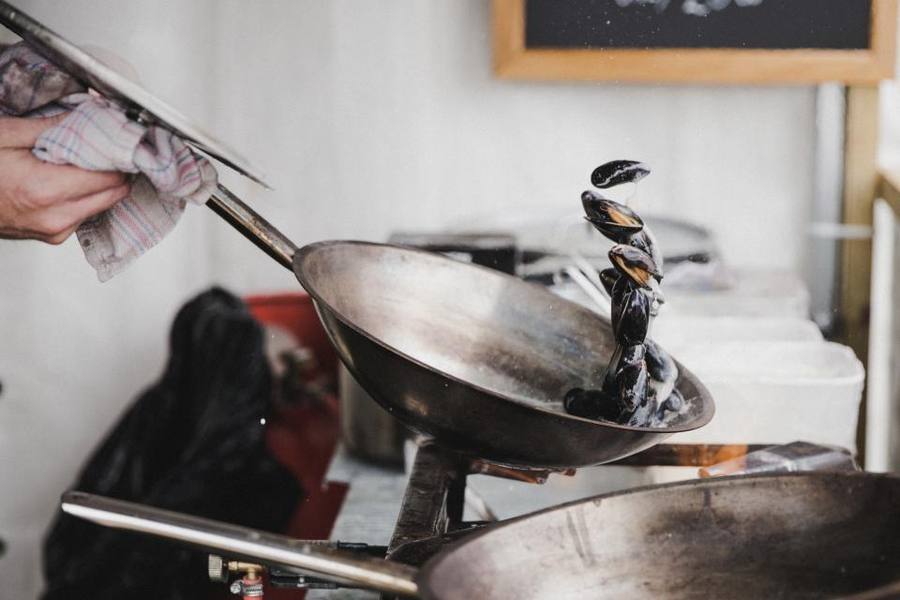
Temsili görsel (stok fotoğraf); ürünün kendisi değildir.
Carbon Steel Sits Between Cast Iron And Stainless
Carbon steel is essentially iron with a low carbon content, rolled thin rather than cast. That gives it cast iron's ability to be seasoned into a naturally slippery surface and to take very high heat, with much less weight and faster responsiveness.
Against stainless it browns more aggressively, tolerates higher temperatures, and becomes semi-non-stick with use, which stainless never does. Against cast iron it is lighter, heats faster and cools faster, which makes it far more controllable.
It is the pan professional kitchens use for searing steaks, omelettes and anything that needs ferocious heat, and it is considerably cheaper than premium stainless.
Seasoning Is The Whole Story
A carbon steel pan arrives with a protective coating that must be scrubbed off, and then must be seasoned — heated with a very thin film of oil, repeatedly, until a hard polymerised layer forms.
That layer is what makes the pan release food, and it builds over months of cooking rather than being finished in an afternoon. A pan that is three months into regular use behaves completely differently from a newly seasoned one.
It is also destroyed by dishwashers, prolonged soaking, aggressive detergents and acidic cooking. Tomatoes, wine and lemon strip seasoning, which means the pan is not suitable for sauces and braises regardless of how good it is at searing.
Rust And Real Maintenance
Bare iron rusts. A carbon steel pan left wet will show rust within hours, and this is the single thing that makes people give up on them.
The routine is straightforward and non-negotiable: wash with hot water and a brush, dry on the hob until completely dry, and wipe the thinnest possible film of oil over the surface. It takes under a minute and it must happen every time.
Surface rust is recoverable by scrubbing and re-seasoning, so a neglected pan is not ruined. But anyone unwilling to commit to drying it immediately should buy stainless instead, and that is a genuine compatibility question rather than a failing of the pan.
Against The Alternatives
Against cast iron, carbon steel is lighter, faster to respond and easier to handle, with less thermal mass for holding heat under a big steak.
Against stainless, it browns harder, takes more heat and becomes semi-non-stick, and it cannot do acidic cooking or go in a dishwasher.
Against non-stick, a well-seasoned carbon steel pan releases eggs nearly as well, takes any heat, and lasts forever rather than a few years.
Who Should Not Buy It
Anyone who will not dry a pan immediately after washing should buy stainless, because rust is not negotiable.
Anyone cooking mostly tomato sauces, wine reductions and braises should not use carbon steel for those, as the acid strips seasoning.
Anyone wanting a dishwasher-safe pan is in the wrong category entirely.
The Verdict
A superb searing and egg pan that becomes better the more it is used, takes heat stainless cannot, and costs less than premium clad while lasting indefinitely.
It must be dried immediately, cannot do acidic cooking, and takes months of use before the seasoning really works.
Buy one alongside stainless rather than instead of it — carbon steel for searing and eggs, stainless for sauces and anything acidic.
Bir bakışta
Artılar
- Develops a genuinely semi-non-stick seasoning with use
- Takes higher heat than stainless or non-stick
- Lighter and more responsive than cast iron
- Cheap relative to clad stainless and lasts indefinitely
Eksiler
- Rusts within hours if left wet
- Acidic cooking strips the seasoning
- Not dishwasher safe and cannot be soaked
- Takes months of use before seasoning performs well
Sıkça sorulan sorular
How do I stop it rusting?
Wash with hot water and a brush, dry it completely on the hob, and wipe the thinnest possible film of oil over it. It takes under a minute and it must happen every time — a pan left wet will show rust within hours.
Can I cook tomato sauce in it?
No, or rather you can once and then re-season. Acid strips the polymerised seasoning that makes the pan work, so tomatoes, wine and lemon belong in stainless. Carbon steel is for searing, frying and eggs.
How long until it is non-stick?
Months of regular use rather than one seasoning session. The layer builds each time you cook with fat at heat, and a pan three months in behaves completely differently from a new one. Cooking bacon in it early helps considerably.
Teknik Özellikler
| Material | Carbon steel |
| Seasoning | Required; builds over months |
| Maximum heat | Very high |
| Weight | Lighter than cast iron |
| Acidic cooking | Not suitable |
| Dishwasher | No |
| Rust risk | High if left wet |
| Expected life | Indefinite |
Özet
A superb searing and egg pan that improves with every use and lasts forever, for less than clad stainless. Dry it immediately, keep acid out, and own stainless too.
Amazon'da Fiyatı Kontrol Et