Work Sharp Knife and Tool Sharpener
Temsili görsel (stok fotoğraf); ürünün kendisi değildir.
For People Who Will Not Use A Stone
The honest reality is that many people will never learn to use a whetstone, and a drawer of dull knives is worse than any compromise. A powered sharpener is the pragmatic answer for that household.
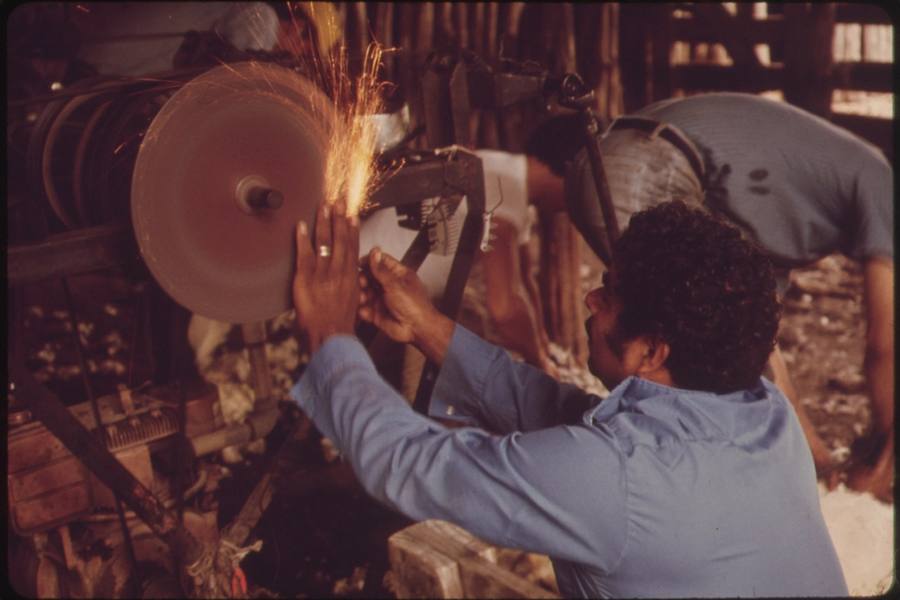
The Work Sharp uses flexible abrasive belts running against the blade at a guided angle, which removes the main difficulty of freehand sharpening — holding a consistent angle — and produces a genuinely sharp edge in a couple of minutes.
It also sharpens things a kitchen stone will not: garden shears, axes, scissors and chisels, which for a household with tools as well as knives adds real value.
It Removes A Lot Of Metal
This is the central caveat. Belt sharpeners are fast because they are aggressive, and each sharpening takes noticeably more metal off than a whetstone would.
For cheap knives that is irrelevant — they will be replaced long before it matters. For a good forged German knife intended to last decades, repeated belt sharpening will visibly narrow the blade over years.
A reasonable approach is to use it on everyday knives and keep a stone for the good ones, which for most households is a sensible division rather than a compromise.
The Convex Edge
Because the belts are flexible, they wrap slightly around the edge and produce a convex rather than a flat bevel. A convex edge is strong and cuts well, and it is not what most kitchen knives are designed around.
In practice it works fine and many people prefer it. It does mean a knife sharpened this way and later taken to a stone needs some work to re-establish a flat bevel.
It also means the edge angle is set by the guide rather than by the knife, so a Japanese knife with a finer factory angle will be reground to the guide's angle, losing some of what made it cut well.
Against The Alternatives
Against a whetstone, this is faster and easier and removes more metal and imposes its own angle; the stone is better for good knives.
Against pull-through sharpeners, the Work Sharp is considerably better — guided, powered and producing a real edge rather than a torn one.
Against professional sharpening services, this is cheaper per use and less precise, and a service is worth it for a genuinely good knife.
Who Should Not Buy It
Anyone with expensive Japanese knives should not use it on them, since the guide angle and the metal removal both work against what those knives are for.
Anyone willing to learn a stone should learn the stone, because it is cheaper, gentler and better.
Anyone with only one or two good knives is better served by a stone or a sharpening service.
The Verdict
A genuinely effective powered sharpener that turns a drawer of dull knives into sharp ones in minutes, and handles tools as well as kitchen blades.
It removes a lot of metal, imposes its own angle and produces a convex edge, all of which matter on good knives and not at all on cheap ones.
Use it on everyday knives and keep a stone for anything you care about — that division gets the benefit of both.
Bir bakışta
Artılar
- Guided angle removes the main difficulty of sharpening
- Genuinely sharp results in a couple of minutes
- Also sharpens scissors, shears, axes and chisels
- Far better than pull-through sharpeners
Eksiler
- Removes considerably more metal than a whetstone
- Imposes its own edge angle regardless of the knife
- Produces a convex bevel rather than a flat one
- Wrong tool for expensive Japanese knives
Sıkça sorulan sorular
Will it damage my knives?
It removes considerably more metal than a stone and imposes its own angle. On cheap everyday knives that is irrelevant. On a good forged knife meant to last decades, repeated use will visibly narrow the blade, so keep a stone for those.
Can I use it on Japanese knives?
You can, and you should not. Japanese knives have finer factory angles and harder steel, and the guide will regrind them to its own angle while taking off a lot of metal — removing exactly what made the knife worth buying.
Is it better than a pull-through sharpener?
Considerably. It is guided, powered and produces a real edge rather than tearing one. If the choice is between this and a pull-through, this is clearly better; if it is between this and learning a stone, the stone wins.
Teknik Özellikler
| Type | Powered flexible belt sharpener |
| Angle | Guided, fixed by the tool |
| Edge produced | Convex |
| Speed | A couple of minutes per knife |
| Also sharpens | Scissors, shears, axes, chisels |
| Metal removal | Aggressive |
| Best for | Everyday and cheap knives |
| Unsuitable for | Fine Japanese blades |
Özet
Turns a drawer of dull knives sharp in minutes and handles garden tools too. Aggressive with metal and imposes its own angle — keep a stone for the good knives.
Amazon'da Fiyatı Kontrol Et